RGB SMD LED background

RGB SMD LED Manufacturer for Color-Controlled Designs

Leienda manufactures RGB LED packages in conventional externally driven, IC-integrated addressable and ceramic constructions. Compare the control method, package footprint, channel connections and thermal path before choosing a part. We can also coordinate the selected LED with a PCB, FPC or PCBA light-source assembly.

Compare RGB LED Options
RGB SMD LED packages on circuit board

Choose the RGB Package Construction

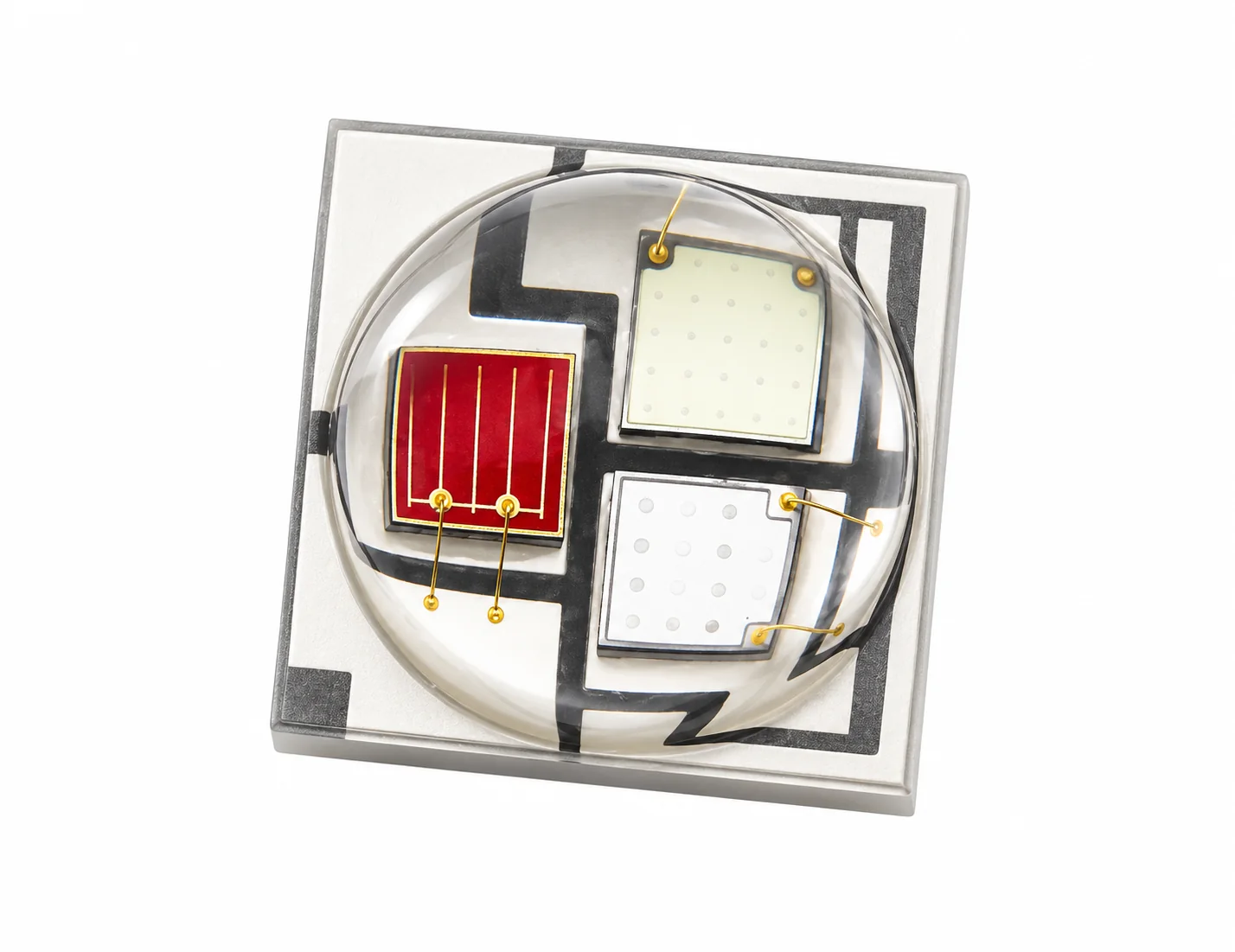
RGB describes the red, green and blue emitters. The package construction determines how those channels connect to the circuit, how they are controlled and what must be checked before the PCB layout is fixed.

3030 and 3528 conventional RGB SMD LED packages

Standard RGB SMD LEDs

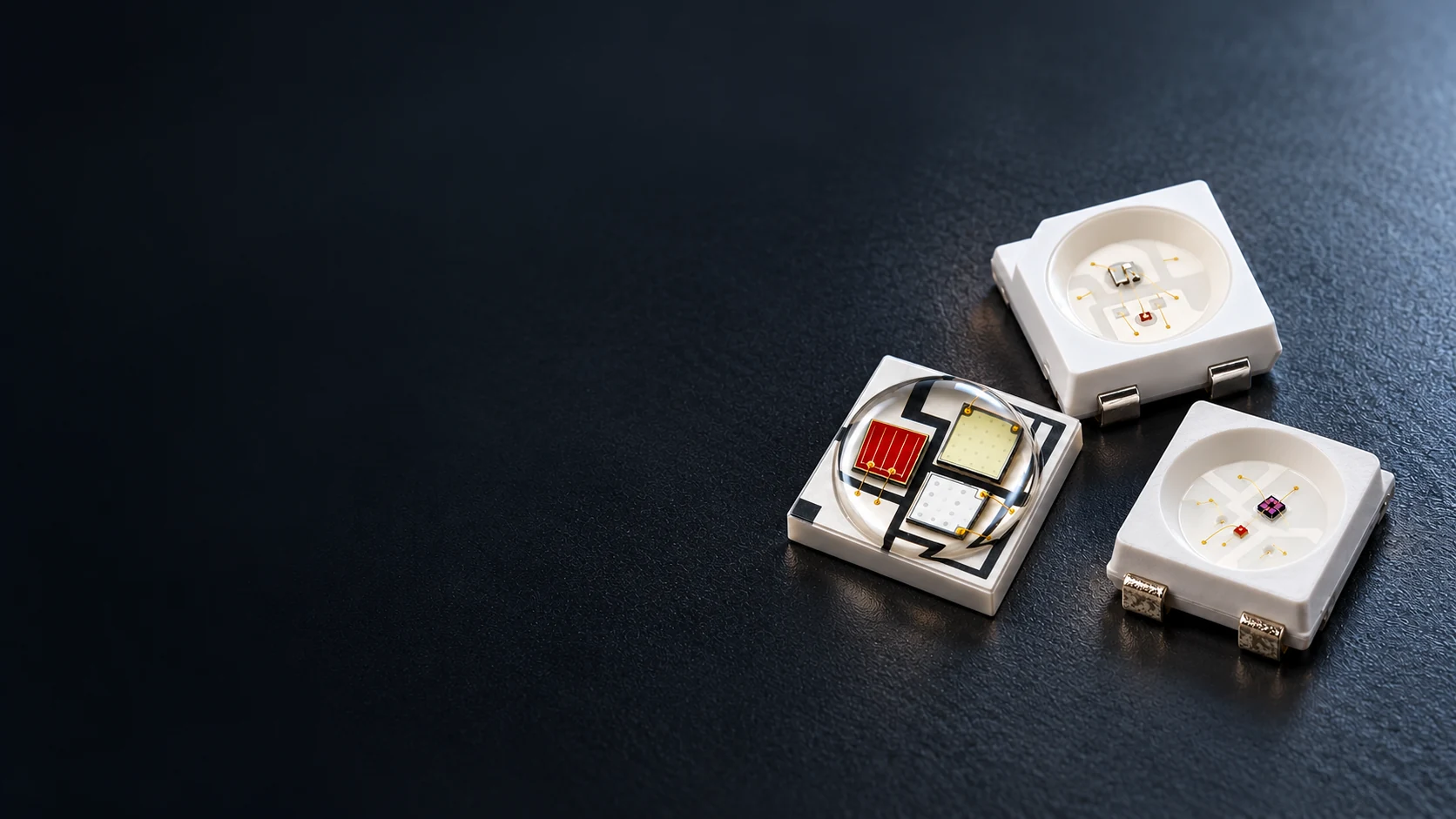
Conventional RGB packages give the circuit access to the color channels without an integrated pixel-control IC. Leienda’s pictured options include six-pad 3030 flat and domed constructions and a 3528 RGB package. Choose the actual part by footprint, channel pinout, drive current and optical target.

Selection cue: For externally driven color mixing and a defined board layout.
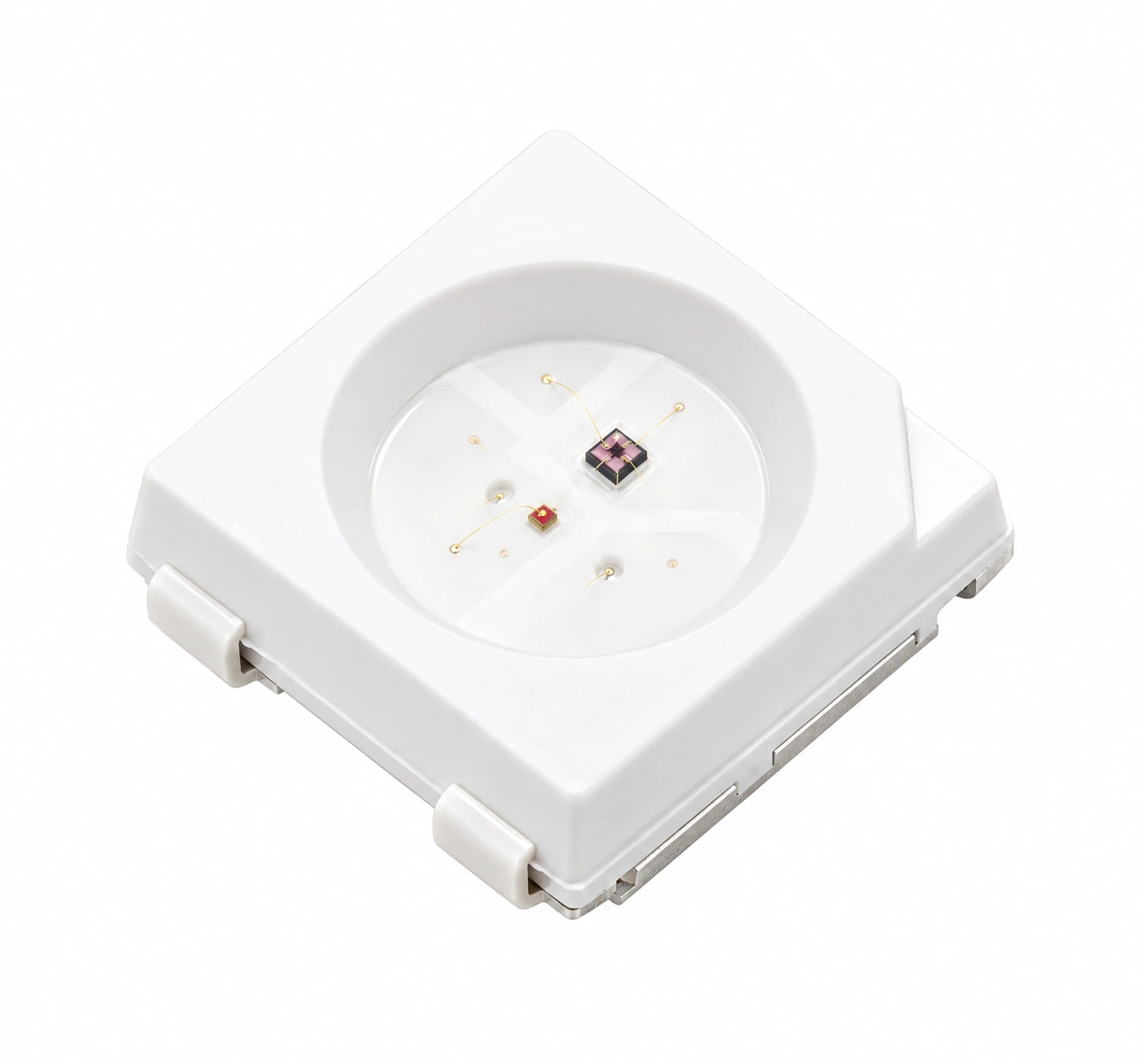
IC-integrated addressable 5050 RGB LED package

Addressable RGB SMD LEDs

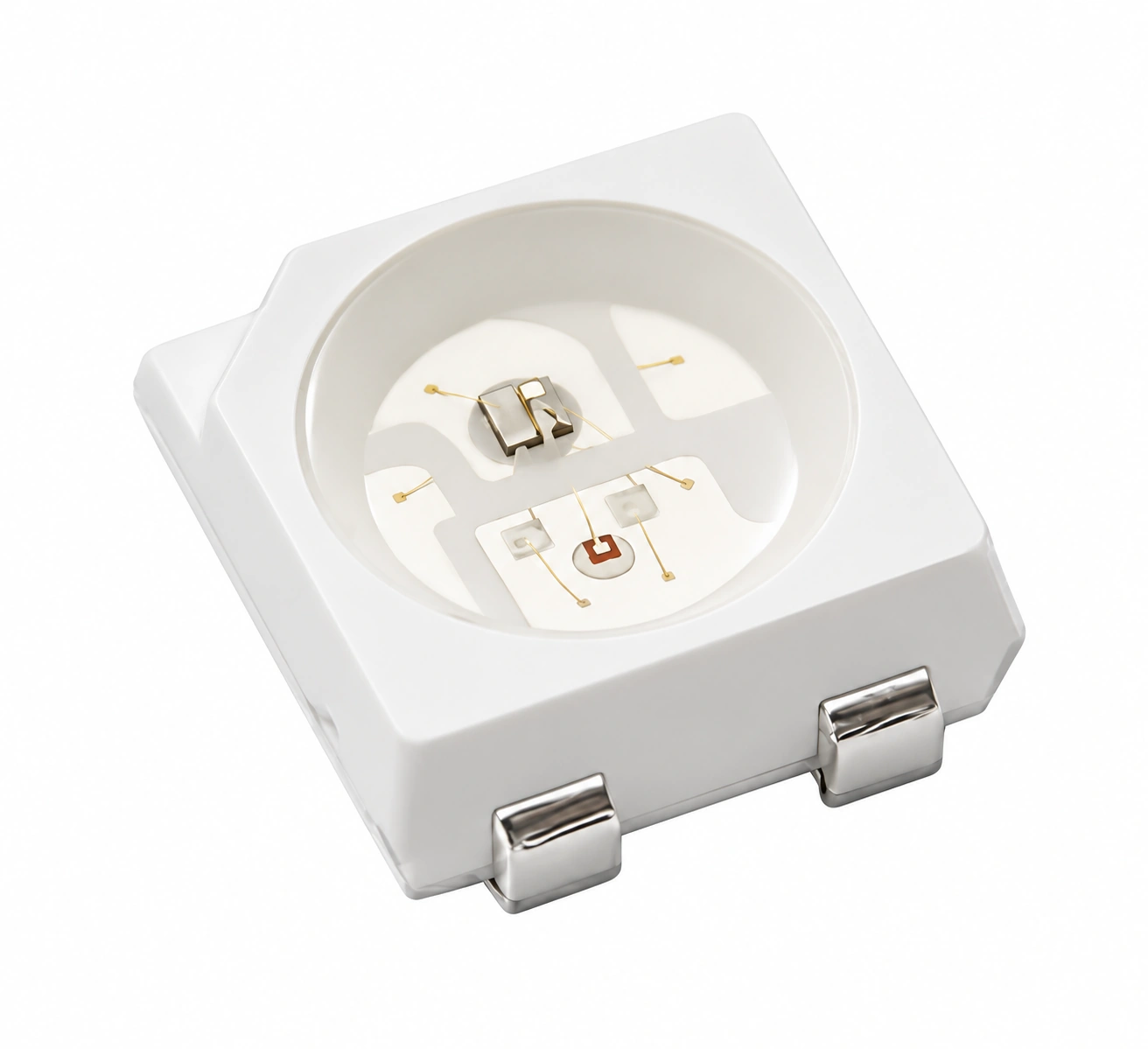
An integrated control IC combines the LED and pixel-control function in one package. Leienda’s product presentation shows addressable 5050, 3535 and 3528 constructions. The supply voltage, pinout, data interface and controller compatibility belong to the selected model—not to the word “addressable” alone.

Selection cue: For individually controlled pixels and coordinated controller design.

Ceramic 5050 RGB LED package

Ceramic RGB SMD LEDs

Leienda’s ceramic 3535 and 5050 RGB examples offer a different package construction for projects that require a closer review of electrical load and heat flow. Compare the exact ceramic part and its mounting conditions with the board’s thermal design; a ceramic package name alone does not establish usable power.

Selection cue: For designs where package construction and thermal path are key selection factors.

Standard, Addressable or Ceramic?

Construction Control approach Documented package examples Check before selection
Standard RGB External circuit drives the color channels 3030 and 3528 product imagery; additional RGB package families appear in series records Pad layout, common or separate terminals, channel current, voltage and optical data
Addressable RGB Control IC integrated with the LED package 5050, 3535 and 3528 presentation examples Exact supply voltage, data protocol, input/output pinout and controller compatibility
Ceramic RGB RGB emitters in a ceramic package construction 3535 and 5050 product imagery Part-specific ratings, solder pattern, board thermal path and optical requirement

These are construction paths, not interchangeable electrical specifications. Select an identified part and review its drawing and channel-level data before approving the PCB or controller.

Resolve the Details That Can Change the Board Design

LED package pinout diagram concept

A package code does not define the pinout.

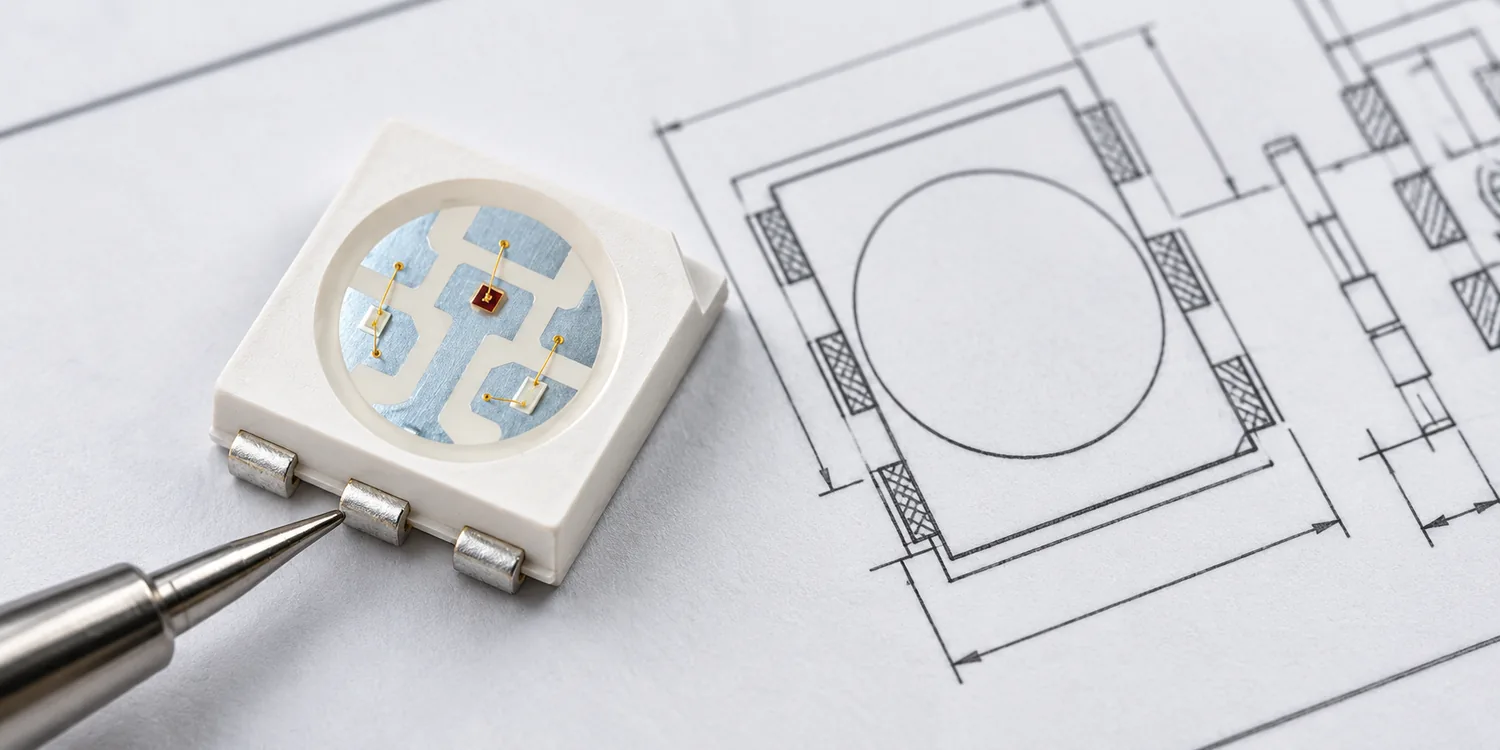
A 3030, 3528 or 5050 size label helps identify a body class, but does not tell you whether the RGB channels share a terminal or how each pad connects. A footprint chosen from a similar-looking part can require a PCB revision. Use the selected model’s drawing and polarity map.

LED controller and IC compatibility concept

A controller cannot be chosen from the LED photo.

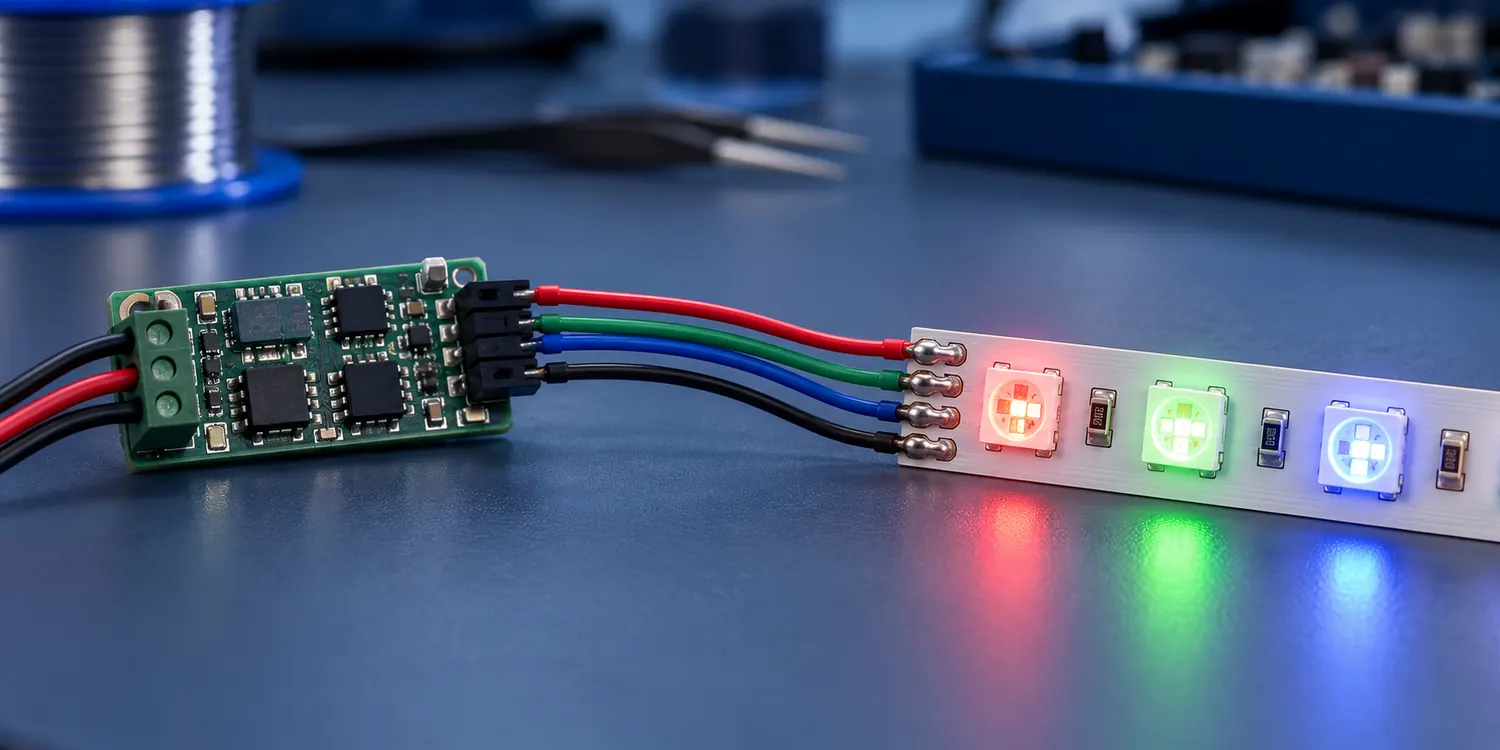
A conventional RGB package needs a suitable external channel driver. An addressable part also needs a matching supply and data interface. Confirm the IC model, signal requirements and channel order before committing to controller firmware or a cascaded layout.

LED thermal and color evaluation concept

Color and heat must be evaluated at the operating point.

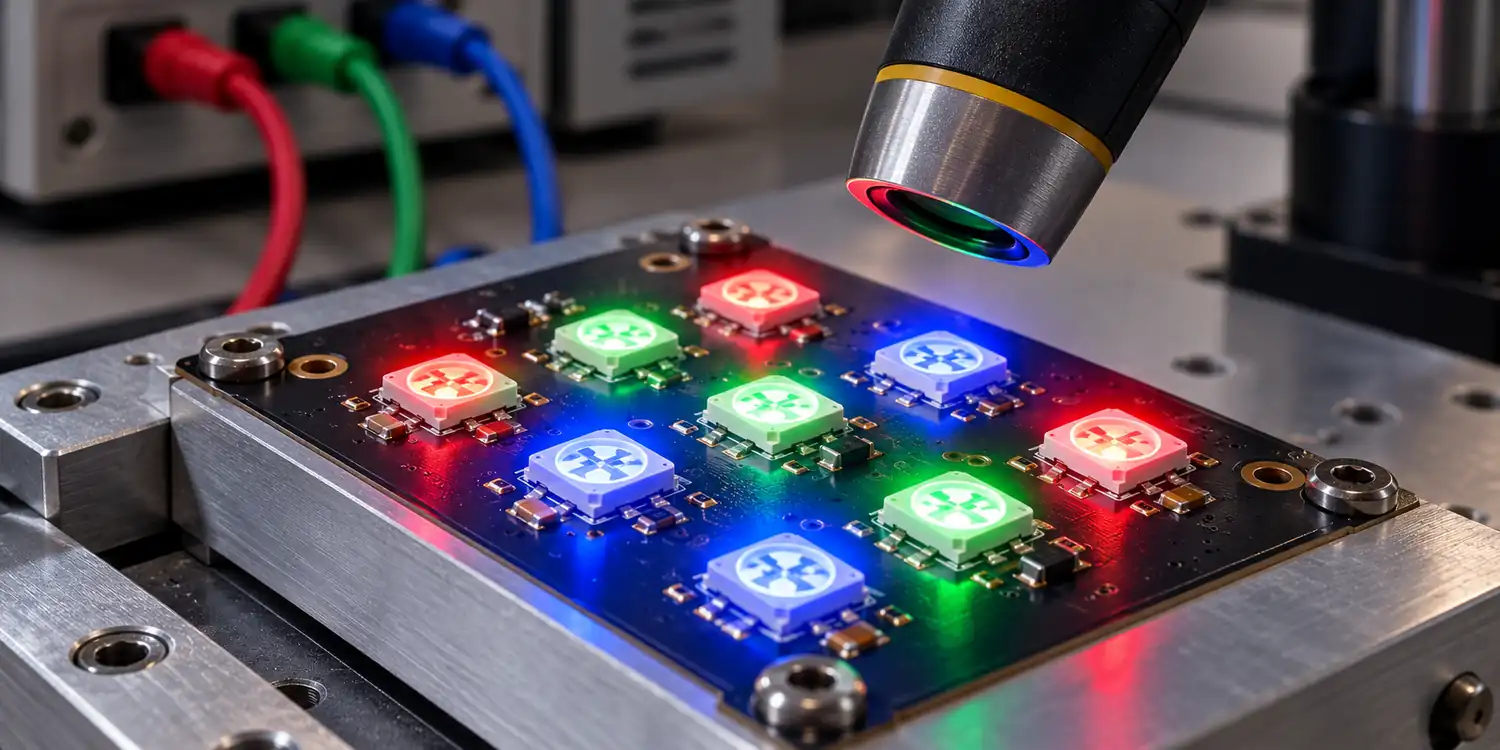
Red, green and blue channels may have different voltage and optical behavior. Drive current, duty cycle, board material and temperature affect the complete light source. Compare channel-level values under stated test conditions and assess the assembled board—not the package name alone.

Start With the Footprint, Then Confirm the Part

Package code Nominal body-size class RGB construction shown in Leienda’s materials Next drawing to review
3030 Approximately 3.0 × 3.0 mm Conventional six-pad flat and domed RGB examples Body outline, pad locations, polarity and height
3528 Approximately 3.5 × 2.8 mm Conventional RGB and addressable RGB examples Exact footprint and channel or data connections
3535 Approximately 3.5 × 3.5 mm Addressable and ceramic RGB examples Package construction, pads and thermal interface
5050 Approximately 5.0 × 5.0 mm Addressable and ceramic RGB examples Pinout, optical arrangement and board clearance

The four-digit code is a starting point for mechanical comparison. Different constructions within the same nominal size can have different pads, heights, electrical limits and optical output. Use the current drawing for the part you intend to assemble.

RGB LED component to PCB assembly progression

Plan the LED and the Board Together

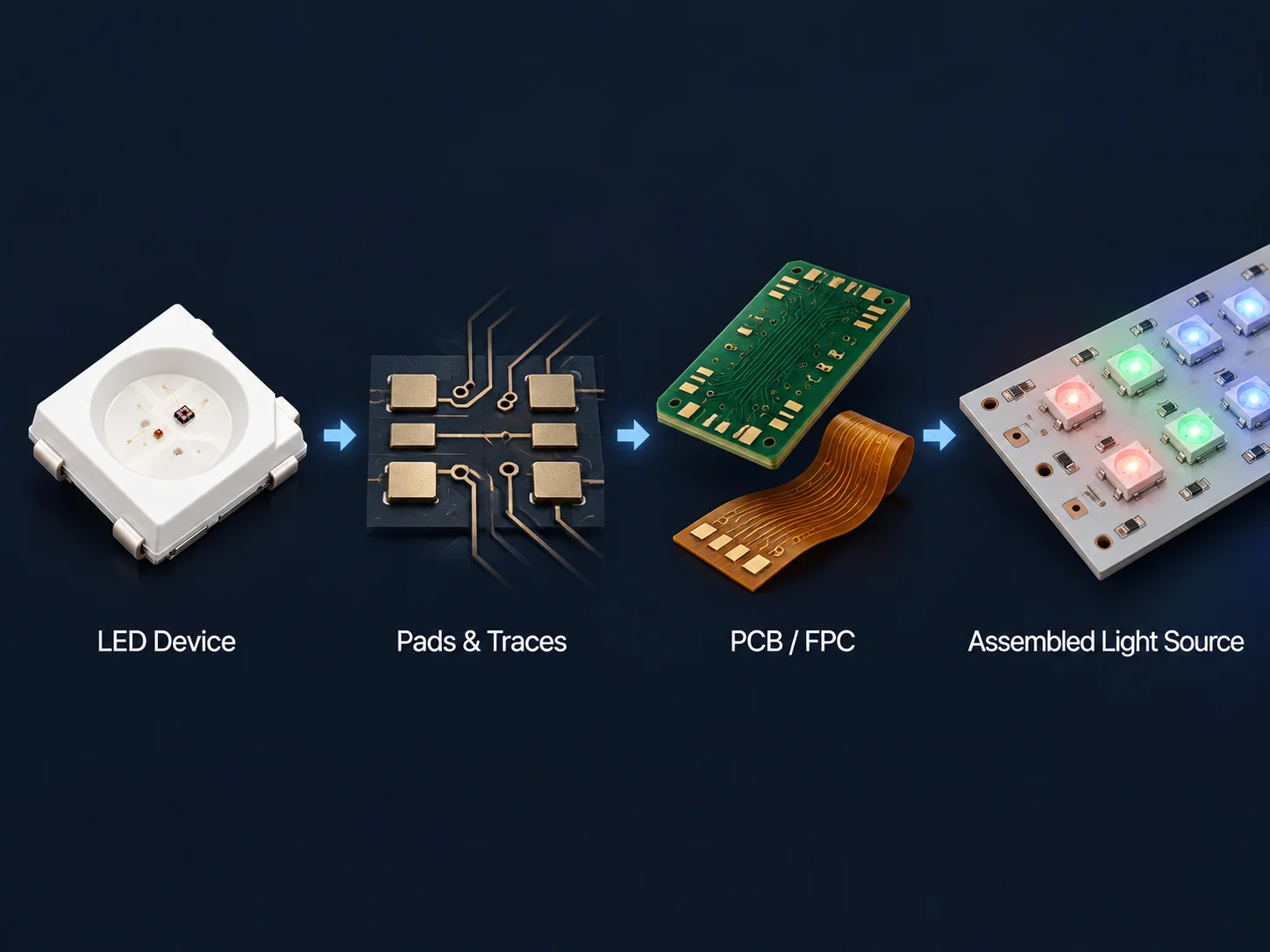
Color-changing light sources depend on more than the packaged LED. Channel routing, pixel spacing, supply distribution, heat flow and the shape of the board all affect the assembled result. Leienda supports LED selection alongside PCB, FPC, SMT and PCBA light-source requirements, so the component, mounting pattern and assembly can be discussed within one project. For a display or pixel-lighting design, the final controller, optics, power system and finished installation still require system-level validation.

Product Choices With Integration in Mind

Three construction paths

Conventional channel-driven, IC-integrated addressable and ceramic RGB packages allow the discussion to begin with the circuit and thermal requirements rather than one generic “RGB LED” label.

More than one footprint

The documented 3030, 3528, 3535 and 5050 examples give different starting points for board space, pad access and package construction. Exact dimensions and ratings remain part-specific.

Component-to-assembly coordination

When a project needs an assembled light source, Leienda can discuss the LED together with PCB or FPC shape, SMT placement and PCBA requirements. The selected specification should remain tied to the actual part and board design.

LED Lamp Bead Development and Production in Shenzhen

Leienda develops and produces LED lamp beads in Shenzhen. Its ISO 9001:2015 quality management system certificate names Shenzhen Leienda Optoelectronics Technology Co., Ltd. and covers the development and production of LED lamp beads. For an RGB project, evaluation should still be based on the identified part, its electrical and optical conditions, and the agreed board or assembly requirements.

ISO 9001:2015 quality management system certificate — scope: development and production of LED lamp beads.

RGB SMD LED Selection Guide

What does an RGB SMD LED package code tell me?

A code such as 3030, 3528, 3535 or 5050 indicates a nominal body-size class. It does not identify the internal circuit, drive voltage, pad pattern, viewing angle or optical output. Leienda’s materials show different RGB constructions within these size families, so begin with the available board area and required color-control method, then check the drawing of the exact part.

How do standard and addressable RGB LEDs differ?

A standard RGB package exposes color channels for an external drive circuit. An addressable package contains a control IC so a compatible controller can address pixels through its specified data interface. The integrated IC changes the wiring and control review; it does not make every addressable LED compatible with every controller. Leienda shows both construction paths, including conventional 3030 examples and IC-integrated 5050 examples.

How should I check pinout and drive compatibility?

Start with the actual pin diagram. Some multi-pad RGB designs share a terminal, while others provide different channel connections; pad count alone is insufficient to assign polarity. For conventional parts, compare the driver with each channel’s forward voltage and rated current. For an IC-integrated part, also verify the supply range, input/output signals, protocol and channel order for the identified model. Test the selected component with the intended board and controller before approving production artwork.

When should I consider a ceramic RGB package?

Consider the ceramic 3535 or 5050 examples when the project requires a deliberate review of package construction and heat transfer. The usable operating point depends on the specific LED, solder connection, board material, copper area and ambient conditions. Compare part-level electrical and optical data with the intended thermal path; ceramic construction by itself is not a power or lifetime guarantee.

Can RGB SMD LEDs be used in a custom board or display design?

Yes, RGB packages can be selected as components for color-changing boards and pixel-lighting assemblies. Define the required pixel or emitter spacing, board shape, channel architecture, power distribution and optical target. Leienda can coordinate the LED selection with PCB/FPC, SMT and PCBA light-source requirements. A finished display’s control electronics, enclosure and installation performance must be evaluated as a complete system.

RGB SMD LEDs in custom board design

What should I compare when sourcing RGB LEDs for production?

Compare identified parts under the same test conditions: channel-level electrical data, color or wavelength bins, optical output units, package drawing, pinout, thermal limits and soldering guidance. Check whether the supplier can keep the agreed specification aligned with the intended board assembly and quality requirements. Leienda’s documented range spans conventional, addressable and ceramic RGB constructions, while its quality management certificate covers LED lamp bead development and production. Final purchasing terms belong in the current quotation and agreed specification.

Explore Related LED Options

RGBW note: If the project needs a dedicated white-light channel alongside RGB color mixing, compare an RGBW configuration separately. Its channel count, control method and package details must be checked against the selected part.

Discuss Your RGB LED Design

Start with the construction that fits your circuit: conventional RGB, addressable RGB or ceramic RGB. A package drawing, controller requirement or board outline will help identify the part data needed for review. If your project includes a PCB, FPC or PCBA light-source assembly, include its shape and channel layout as well.

Direct Contact

  • sales@leiendaled.com
    info@leiendaled.com
  • +86 135 2889 1082
  • 4/F, No. 8 Guanghui Road, Longteng Community, Shiyan Street, Bao'an District, Shenzhen, Guangdong, China

Supported formats: PDF, JPG, PNG, STEP, IGES, STL, DWG (Max 20MB)